


 许可协议,未经允许,禁止用于商业用途。转载需注明出处(点击右侧按钮可直接复制Markdown格式的转载声明)。
接口隔离原则(Interface Segregation Principle, ISP)
定义
Clients should not be forced to depend upon interfaces that they don't use.
客户端不应该依赖那些它不需要的接口
核心思想
记得几年前有一位很厉害的前辈说过:软件设计是什么,就是“分离关注点,消除重复”。这句话一直影响这我,而我做软件设计也是朝着这两个方向努力。而接口隔离原则最核心的就是拆分,即分离关注点。
实例
下面通过一个例子来说明接口隔离的好处。
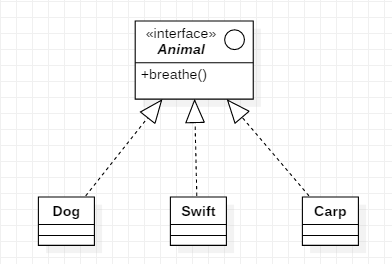
有一个动物的接口,有三个实现类,分别是Dog(狗)、Swift(雨燕)、Carp(鲤鱼),伪代码如下:
public interface Animal {
	/**
	 * 呼吸,所有动物都需要呼吸
	 */
	void breathe();
}

public class Dog implements Animal {
	public void breathe() {
		System.out.println("狗用肺呼吸");
	}
}

public class Swift implements Animal {
	public void breathe() {
		System.out.println("雨燕用肺呼吸");
	}
}

public class Carp implements Animal {
	public void breathe() {
		System.out.println("鲤鱼用腮呼吸");
	}
}
现在新的需求来了,要增加动物的行动能力。狗要能跑,雨燕要能飞,鲤鱼要能游动。如果不拆分接口,那么接口将变成
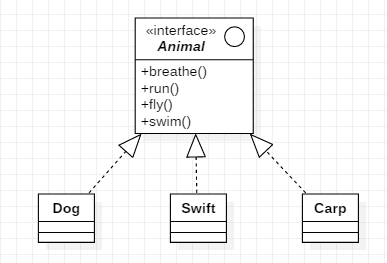
这里的需求是实现了,但是Dog类不得不实现fly()和swim()方法,其他类也是类似的情况,它们不得不实现它们不具备的能力。Animal类就是一个大而全的接口,所有的东西具有的特性都在这里,但Animal的子类却不一定都具备这些特性。
这样做的主要弊端有两点:
- 子类或者实现类不得不实现它们不需要实现的接口
- 调用者不清楚哪些方法是不可用的。比如调用了
Dog的fly()方法,显然不能得到一个正确的结果,因为Dog不具备这样的能力。
下面提供一个Dog类的伪代码。
public class Dog implements Animal {
	public void breathe() {
		System.out.println("狗用肺呼吸");
	}

	public void run() {
		System.out.println("狗子跑的飞快");
	}

	public void fly() {
		throw new NotSupportedException("狗不具备飞翔的能力")
	}

	public void swim() {
		System.out.println("狗不会游泳");
	}
}
为了解决这个问题,我们将接口做一下拆分

这样做就简单明了了。
public class Dog implements Animal, Runable {
	public void breathe() {
		System.out.println("狗用肺呼吸");
	}

	public void run() {
		System.out.println("狗子跑的飞快");
	}
}
我们将行动能力进行了拆分,拆成了Runable、Flyable、Swimable。如果想让动物们具备某种能力,只需要实现对应的接口即可。
比如现在狗子通过简单的训练,具备了游泳的能力(为什么是游泳?因为你无论怎么训狗子它都上不了天)。我们只需要实现Swimable接口即可。
public class Dog implements Animal, Runable, Swimable {
	public void breathe() {
		System.out.println("狗用肺呼吸");
	}

	public void run() {
		System.out.println("狗子跑的飞快");
	}

	public void swim() {
		System.out.println("狗子通过训练学会了游泳");
	}
}
一个更复杂的例子
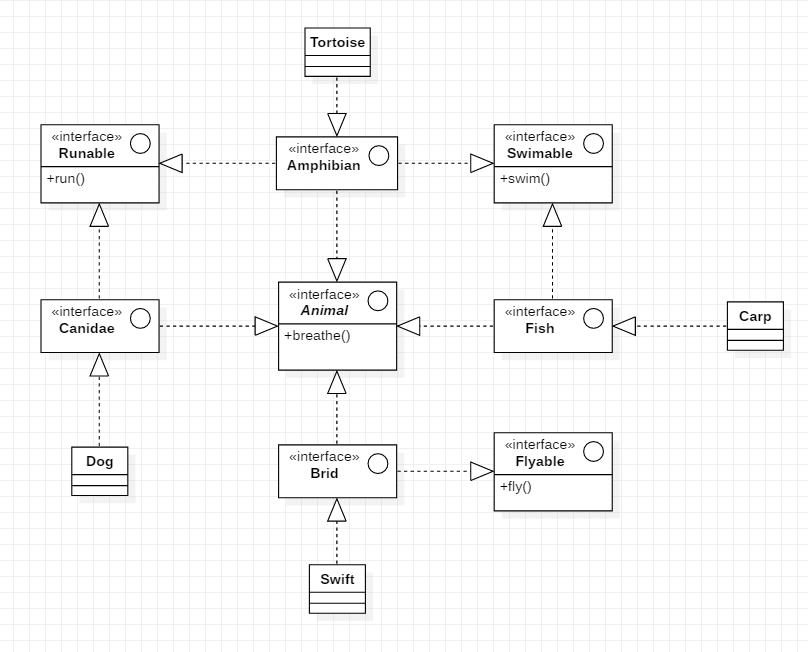
从这张类图中我们可以看出,我们在动物的基础上增加了Canidae、Brid、Fish、Amphibian,分别是犬科、鸟类、鱼类、两栖动物。
这种设计方式是被允许的,而且也享受到了ISP带来的好处。比如两栖动物,它是动物而且具备跑和游泳的能力,这是所有两栖动物的特性(目前还没有即会游泳又会飞的两栖动物)。所以我们只需要让两栖动物的接口Amphibian继承Runable和Swimable接口即可。这种设计方式非常的清晰。
我们可以看一个spring的类,采用的也是这种设计方式。

将功能分类拆成一个一个的“瘦”接口,然后再通过继承将接口整合。类似于上面说的两栖动物。
Spring Data JPA以及tk.mapper也采用了这种设计方式,如下

